
Training through research and innovation
As part of a concerted approach, the ITPL offers research and learning methods that help students continue learning throughout their lives. ITPL, along with its partners in the NIT, intends to systematically strengthen the support for its training courses by leveraging its research strengths for the benefit of all.
Design Thinking programme
Our Design Thinking program will help you master the concept of applying techniques to excel in any field. It is a tool to obtain the core concepts and learn how to plan, think creatively, and stay fully aware in order to achieve success in your career. This will help you become a lifelong, productive thinker. By developing this mindset, you'll be well-equipped to apply the principles of Design Thinking, which are specifically designed to foster innovation and problem-solving skills.
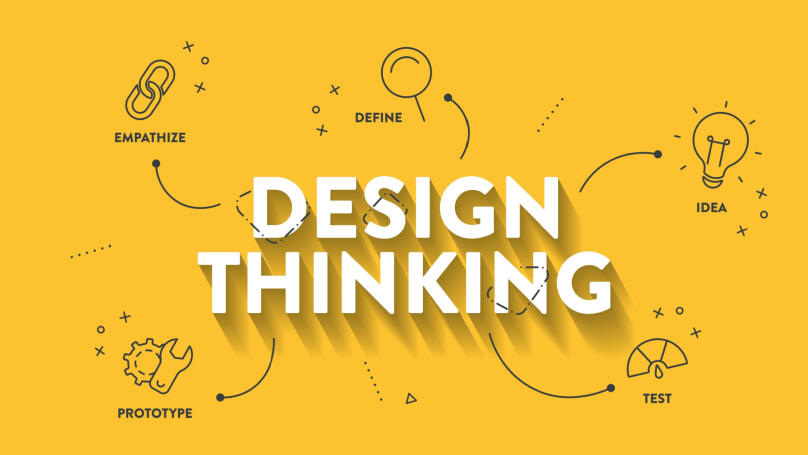
The Design Thinking program focuses on human-centered design, teaching you how to empathize with users, define challenges, ideate creative solutions, prototype, and test ideas in real-world scenarios. Through collaborative, hands-on exercises, you'll develop a mindset that encourages experimentation and continuous improvement. This program equips you with the tools to approach complex problems with a structured, yet flexible framework, enabling you to make impactful decisions and drive change in any professional context.
Here are some steps to follow for participating in the Design Thinking program:
- Begin by understanding the needs, desires, and challenges of your users. Conduct interviews, surveys, and observations to gain insights into their experiences.
- Focus on building empathy to better define the problems that need solving.
- Analyze the information gathered during the empathy phase to identify core problems.
- Create a clear and concise problem statement that will guide the design process. This statement should reflect the needs of your users and the challenges they face.
- Brainstorm a wide variety of possible solutions. Encourage creativity and open-minded thinking to come up with innovative ideas.
- Select a few of the most promising ideas and build simple prototypes.
- The goal is to bring your ideas to life in a tangible form, whether through mockups, digital prototypes, or physical models. These prototypes should be quick and low-cost to create. ;
- Test your prototypes with users to gather feedback and learn what works and what doesn’t.
- Refine and improve your prototypes based on the feedback. Repeat this process of testing and iteration to enhance your solution.
- After testing and refining, implement the final solution.
- Continuously evaluate its impact and effectiveness, making adjustments as needed to ensure it fully meets the needs of your users.
- After completing the process, reflect on what you’ve learned.
- Use insights gained from the project to improve future iterations and continuously enhance your problem-solving skills.